
My Trade
A Short History of British Journalism
- Author:
- Andrew Marr [?ProductPublisher:?]
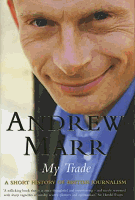
Andrew Marr's history of British journalism is, as one might expect, well researched and written. More than that though, it is thoughtful, informative and entertaining, with appeal for both those inside and outside the media. What is evident from the stories, comparisons and calculations included in the book, is that the author has spent considerable time thumbing his way through copies of early newspapers and media archives, as well as drawing on substantial personal experience.
The book covers newspaper journalism, to a lesser extent radio, and the progression and influence of television. Marr discusses individual roles within the trade, such as editor, columnist, foreign correspondent, and crucially, reporter. Having spent over 20 years immersed in it, Marr is well qualified to comment on the state of British journalism. He covers political journalism in considerable depth, drawing upon his experience as a parliamentary commentator, with a kind of nuts and bolts approach to this specialised and sensitive subject.
The preface of My Trade should be read for its amusing account of Marr's own hapless route into journalism and there's a good deal of entertainment to be found generally in the Fleet Street tales; anecdotes about the colourful and formidable characters that litter the trade, the dirty tricks, the sackings, the alcoholism. There are also many interesting and frankly worrying accounts of how journalists actually go about the business of delivering news.
In a cynical appraisal of contemporary national journalism, Marr exposes the shock tactics often used, and complains of a lack of real reporting in a modern environment where staff are becoming office-based recyclers, creating stories out of press releases and surveys. Long gone are the days where reporters got out into the world to report what they saw and heard and knew who their readers were. This, he argues, has taken all of the colour, originality and imagination out of reporting. And this, he says, is why so many newspapers now have the same bland coverage.
Marr charts the impact of marketing and the 'dumbing down' of newspapers, the shift from real foreign and home news to celebrity gossip, lifestyle and puff pieces. Crucial relationships are delved into: the role of the proprietor and advertisers and how those relationships affect the end product.
Marr urges us to think critically about the media generally: Who owns the newspapers we read? Who produces the current affairs programmes we watch? What the hidden agendas are? and how we should interpret what are often loosely presented as facts. He discusses the lack of trust the public now holds for the media, what has caused this, and what can be done about it.
It is patently clear that this is not only a subject about which Marr knows plenty, it is one about which he cares deeply. Because the impact of good or bad journalism on our consciousness and our daily lives is immense, the future of the trade is of great significance to us all. This is undoubtedly an opinion that journalists will subscribe to rather than the general public. But whether you agree with the viewpoint or not, the book is most definitely a lively and fascinating read.
Reviewed by Susan Smillie
| Extent | 416 Pages | Sub. No. | |
|---|---|---|---|
| Size | N/A | Price | [?DiscountedPrice:?] |
| Format | Hardback | ||
| Availability | [?AvailabilityAlt:?] | Delivery | Delivery options and charges |
 Show all Subjects & Categories